A Trump-Appointed Judge Just Told the EPA It Doesn't Get to Un-Spend Congress's Money
The EPA killed a $7 billion solar program by claiming a new tax law had quietly erased it. A federal judge read the law and disagreed — but the delay may already have done the job.
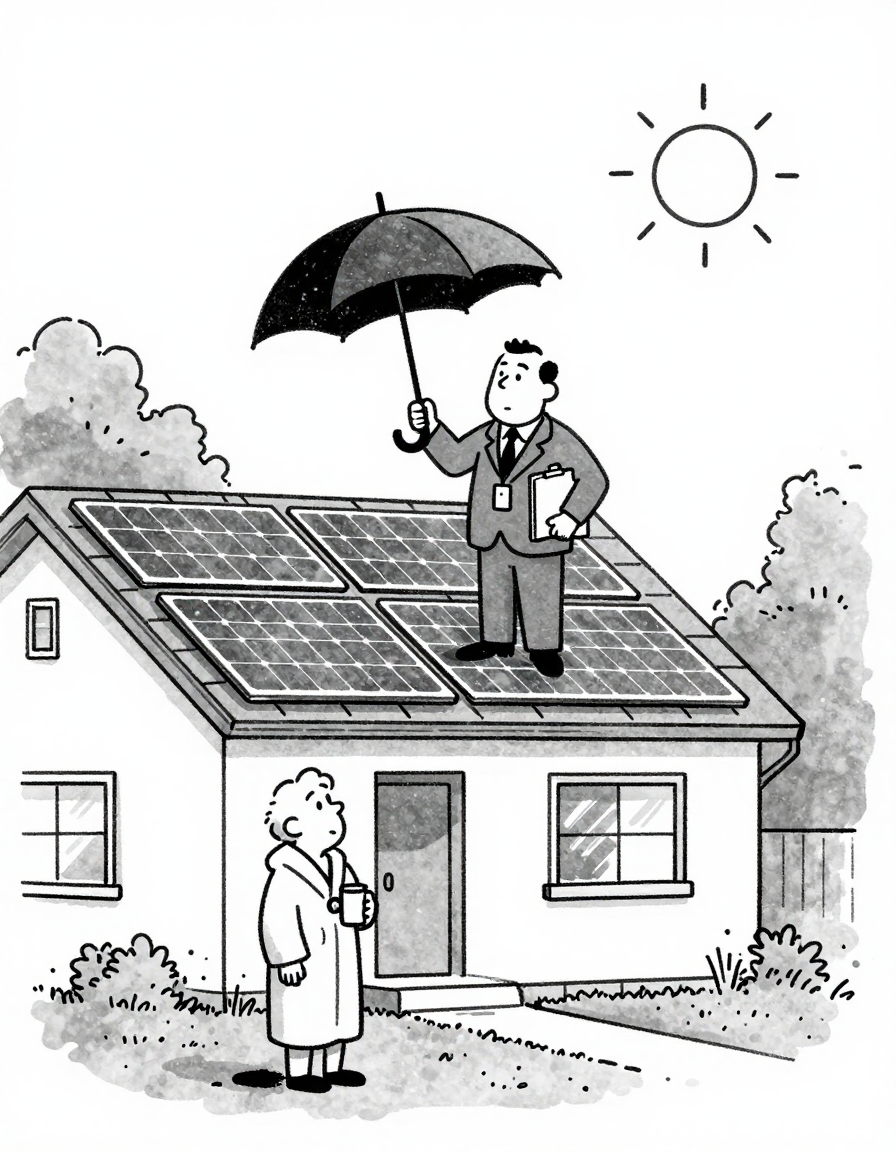
Here is the short version. In 2024, the EPA handed out $7 billion in grants under a program called Solar for All — money meant to get solar onto and around the homes of people who can’t front the cost themselves, the point being lower electricity bills. In August 2025, the EPA yanked it back. Administrator Lee Zeldin called the whole thing a “boondoggle,” which is the word every agency reaches for about a program it has already decided to cancel, and said the EPA no longer had either the legal authority or the appropriated money to run it, because Congress had passed the One Big Beautiful Bill Act a month earlier.
Last week, a federal judge in Rhode Island read that law and said: no, it doesn’t say that. District Judge Mary McElroy ruled the termination unlawful on procedural grounds and vacated it — meaning the cancellation is wiped off the books as though it never happened — and found that Congress plainly expected the EPA to keep administering grants it had already committed to. By her reading, the tax bill did not quietly convert that money into a general pile the EPA could spend however it liked.
McElroy was appointed by Trump, which isn’t the punchline and isn’t a twist. It’s a rough gauge of how thin the government’s argument was. When a judge your own side put on the bench reads your interpretation of your own party’s signature legislation and says that’s not what it says, the problem is usually the interpretation.
The actual mechanism here, because it matters more than the solar panels
Congress appropriates money. The executive branch spends it. That’s the basic architecture — the branch that raises the money decides where it goes, and the branch that runs the agencies carries it out. When an agency signs grant agreements, that money becomes “obligated,” a boring word meaning promised, on paper, to a specific recipient, with a federal signature under it.
The EPA’s theory was that a later, mostly unrelated law silently turned those promises back into loose cash it could redirect at will. If that works here, it works everywhere. Any administration, of any party, can kill any program Congress funded by pointing at some subsequent bill and announcing that the authority evaporated somewhere in the fine print. You don’t need a repeal vote. You don’t need to win the argument in public, or in front of anybody at all. You need one agency lawyer willing to write it down.
That’s the part that will outlast this particular grant program, and it’s the reason a solar story is really a spending-power story.
The part nobody’s press release is going to lead with
Of the $7 billion awarded, only about $53 million had actually reached grantees before the freeze, according to the research firm Atlas Public Policy. Under one percent.
So the administration never had to claw back a dime that was already spent. It only had to close the valve, because almost the entire program was still sitting inside the building. The freeze took effect in August 2025. The ruling came last week. That’s the better part of a year in which the state agencies, nonprofits, and local programs that were supposed to be installing this stuff had payroll to meet, contracts they couldn’t sign, and nothing honest to tell anyone about whether the money was ever going to show up.
Winning in court gets you the legal right to the money. It does not hand back the year, or the staff who left for jobs that existed, or the installers who booked other work. Nobody has confirmed how quickly grantees can actually start drawing funds again, and “the termination is vacated” and “the money is moving” are two different sentences.
The numbers, with the appropriate amount of salt
You’ll see the figures repeated everywhere: more than 900,000 households reached, $350 million a year in electricity savings, 200,000 jobs. Worth knowing where they come from. They’re the EPA’s own projections from 2024, published by the same agency that was then out promoting the program. Nobody undersells the upside at a ribbon-cutting. Treat them as the sales brochure, not an audit.
You don’t need the brochure to see the stakes anyway. The concrete question is whether several hundred thousand lower-income households get a shot at a smaller power bill during a stretch of years when electricity costs have been heading the wrong way. That was the deal Congress funded and paid for. One agency decided on its own that the deal was off.
What’s still open
The EPA says it’s reviewing the decision and weighing an appeal; as of the current reporting, nothing has been filed. There’s a second track, too — a coalition of state attorneys general sued over the same cancellation in Washington state in October 2025, and where that case stands isn’t clear from the public record.
So the fight isn’t finished. But one judge, appointed by this president, applying a Republican tax law, just told the executive branch it doesn’t get to unilaterally decide that a spending law it dislikes has stopped existing. Whether that ruling amounts to anything in the real world depends on how long an appeal takes and how much of the program is still standing when it’s over.
Which, if you’re the one running out the clock, is not a bug in the strategy.